
Lawns to Legumes
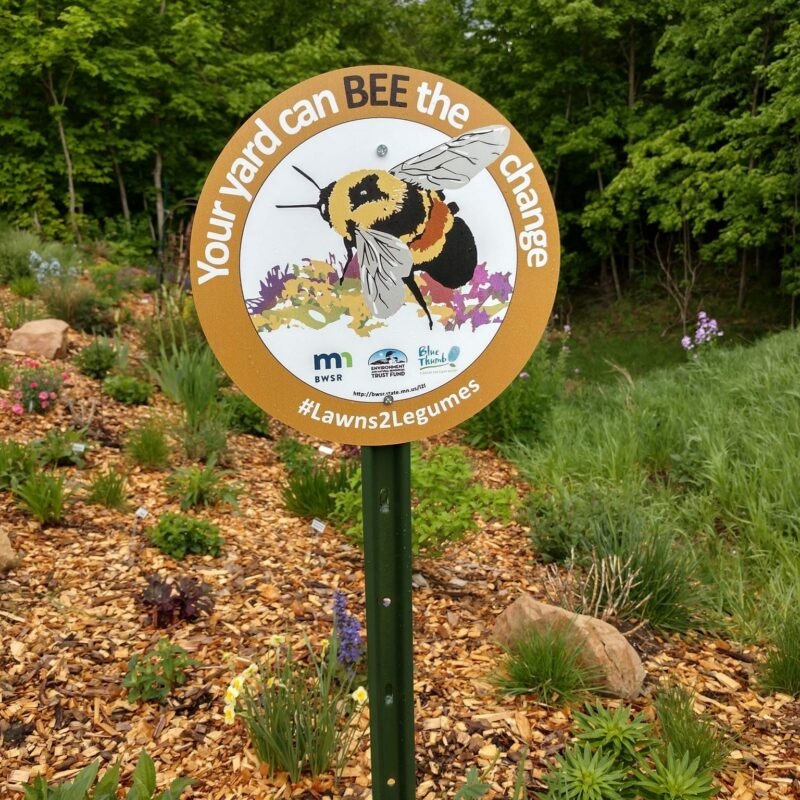
Create habitat for Minnesota’s pollinators
Lawns to Legumes helps Minnesota residents create habitat for monarch butterflies, rusty patched bumble bees, and other at-risk pollinators. Funding can support pollinator gardens, rain gardens, native shoreline plantings, and other projects using native plants.
Spring 2027 applications are now open
Minnesota residents can apply for reimbursement funding of up to $400 toward an eligible pollinator habitat project.
Application deadline: November 30, 2026
[Apply on the Lawns to Legumes program webpage]
Need help planning your project?
Kanabec SWCD offers free planning and design assistance. Contact our office before applying if you would like help choosing a project, selecting native plants, or developing a planting plan.
About the program
Lawns to Legumes supports residential projects that provide food and habitat for pollinators. Projects may include:
- Pollinator gardens
- Rain gardens
- Native shoreline plantings
- Native trees and shrubs
- Pocket plantings and other conversions of lawn to native vegetation
Funding is reimbursement-based, which means participants complete their approved project and submit the required documentation before receiving payment.
Getting started
1. Choose the right project
Consider your available space, sunlight, soil conditions, drainage, and how much maintenance you can provide. Kanabec SWCD can help you identify a project that fits your property.
2. Select pollinator-friendly plants
Minnesota native plants are strongly encouraged because they provide valuable food and habitat for native pollinators. When possible, choose plants that are free of insecticides and neonicotinoids.
A strong planting should include:
- At least three native species blooming in spring
- At least three native species blooming in summer
- At least three native species blooming in fall
- A mix of flower shapes, colors, and plant heights
Including milkweed is encouraged because it provides essential habitat for monarch butterflies.
3. Prepare the site
Good site preparation is one of the most important parts of establishing a successful native planting. The right method will depend on the existing vegetation, site conditions, and project type.
[Site Preparation Methods Guide from the Xerces Society]
4. Plan for long-term care
Projects funded through Lawns to Legumes must be maintained. Participants receiving funding will sign an agreement describing the expected lifespan of the project and its maintenance requirements.
Early maintenance may include watering, weeding, replacing plants, and preventing invasive species from becoming established.
Plant-selection resources
[Plant List] Native Plants for Sustainable Landscapes: Establishment and Management of Lakeshores and Gardens[Plant List] The Best Plants for 30 Tough SitesLearn more about pollinators
[Animal Fact Sheet] Rusty Patched Bumble Bee (Bombus affinis)[Creating My Pollinator Garden: A Lawns to Legumes Story]
Share your observations
You can use the free iNaturalist app to identify plants and animals and contribute observations to community science projects. The app uses photo recognition and input from other users to help identify species.
