Stormwater Practices: Managing Runoff Where We Live
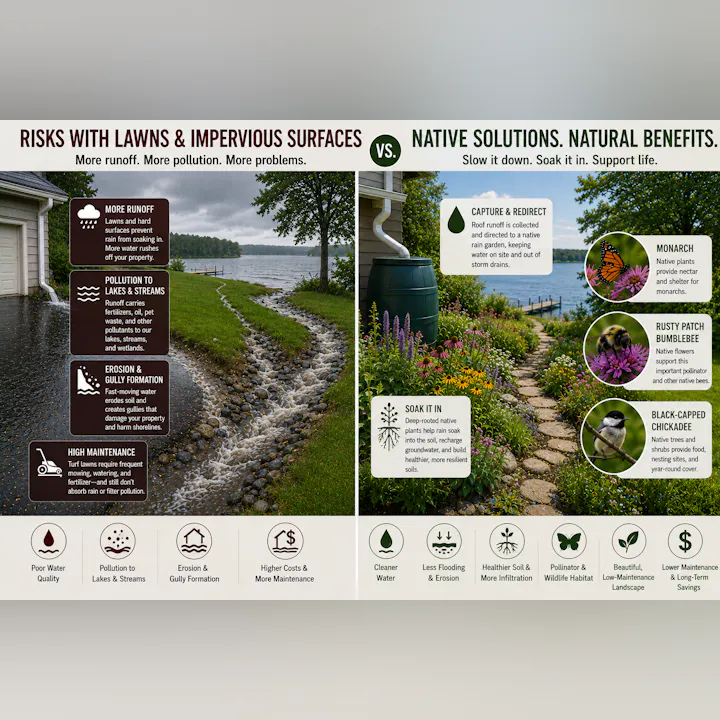
When rain falls on hard surfaces like rooftops, driveways, streets, and sidewalks, it can’t soak into the ground the way it would in a natural setting. Instead, it runs off quickly, picking up sediment, oil, nutrients, and other pollutants along the way and carrying them into nearby lakes, rivers, and wetlands.
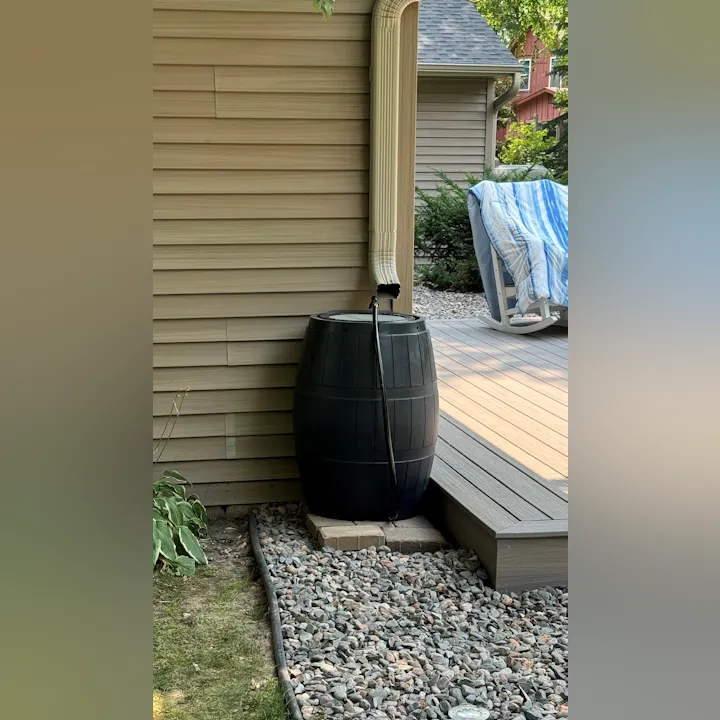
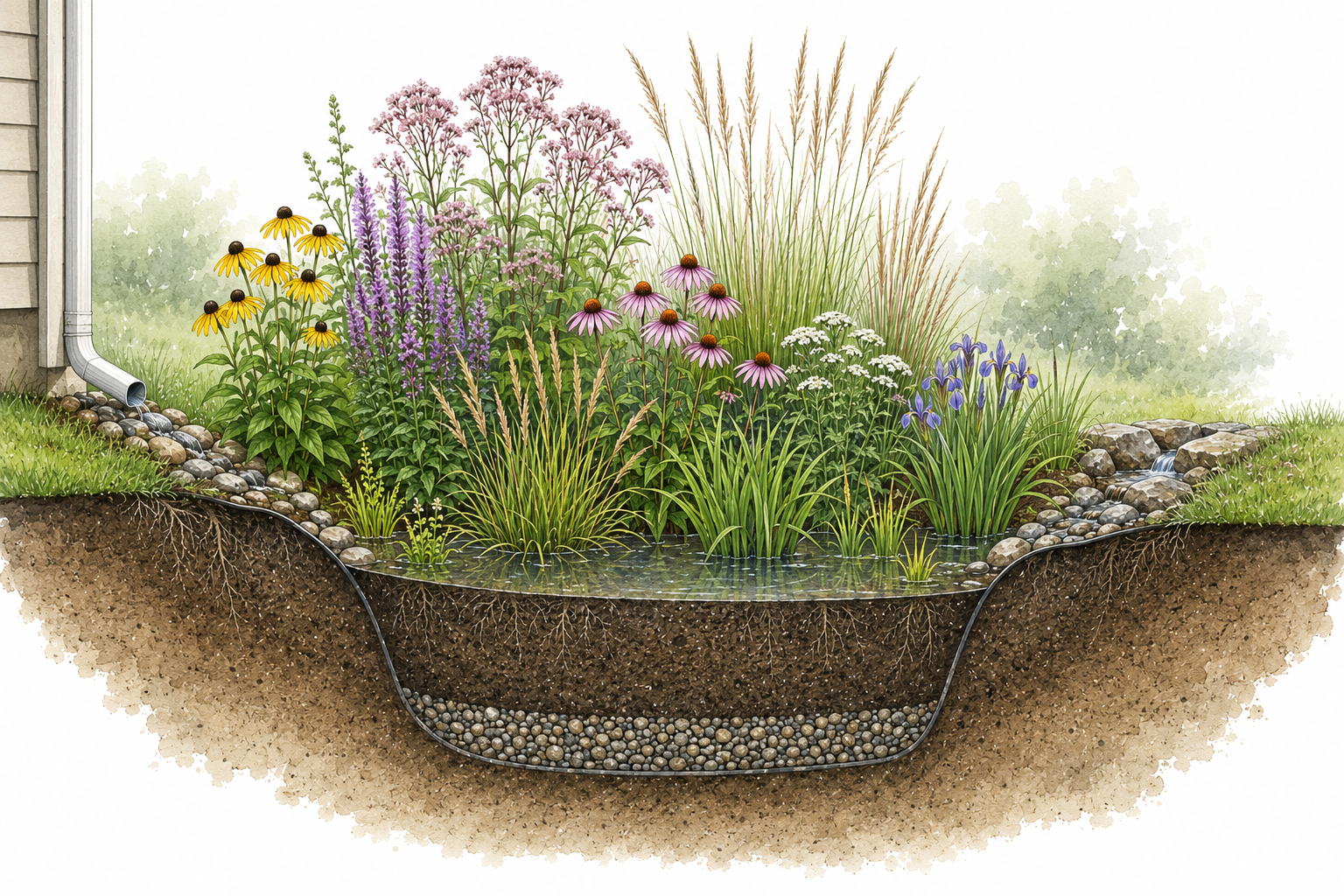
Nature-based stormwater practices are designed to slow down, capture, and treat this runoff, helping to protect our water resources and reduce localized flooding.
Why Runoff Matters
Even in smaller towns and rural subdivisions, impervious surfaces can contribute a surprising amount of runoff. Unmanaged stormwater can lead to:
- Algae blooms in lakes caused by excess nutrients
- Erosion in nearby ditches and streams
- Flooding in low-lying areas
- Pollution from road salt, oil, fertilizers, and pet waste
By installing simple green infrastructure practices, you can help manage stormwater close to where it falls and reduce impacts downstream.